
Biological Pest Control via Syrian Woodpecker Population Enhancement
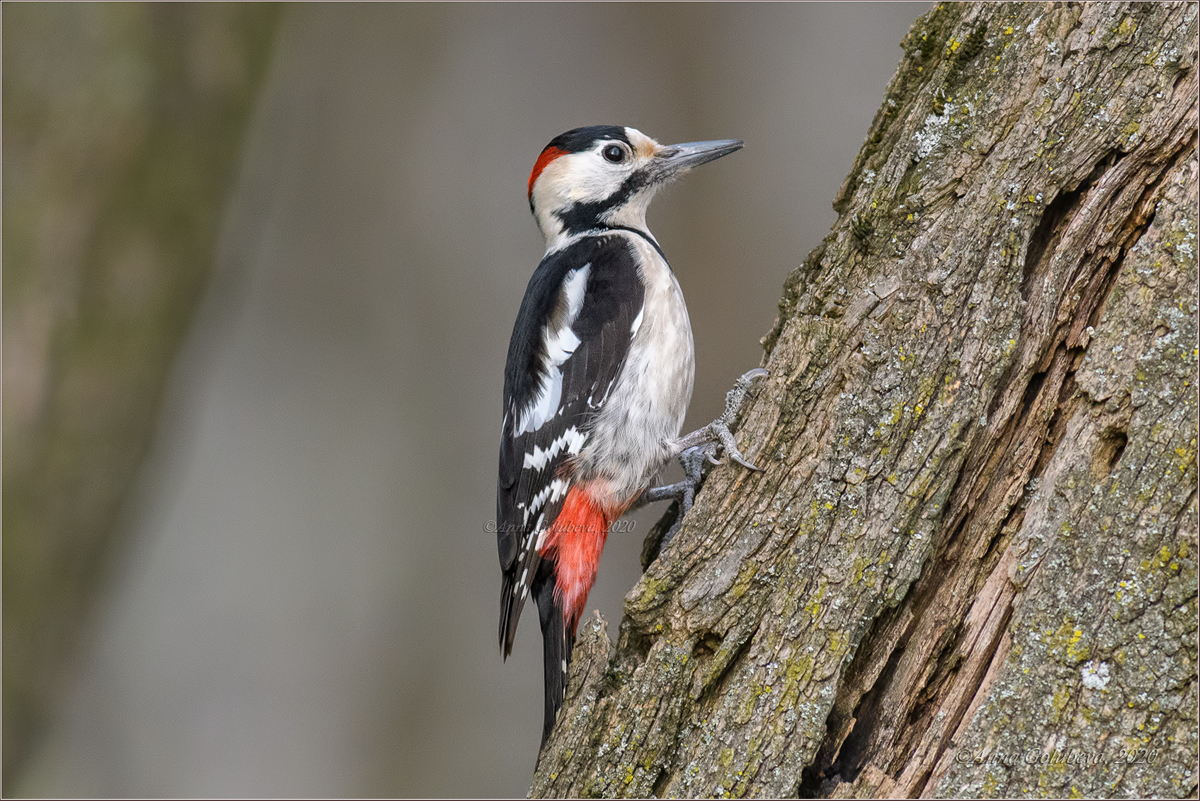
Yerevan’s urban forest is currently facing a critical ecological challenge from wood-boring and leaf-damaging insects. Conventional mechanical interventions, such as heavy pruning and chemical spraying, have proven ecologically disruptive and often fail to address the root cause of infestations deep within the tree timber. A more sustainable and scientifically grounded solution is to prioritize the conservation of the Syrian Woodpecker (Dendrocopos syriacus). This memo outlines the biological imperative for integrating this species into our Integrated Pest Management (IPM) strategy to ensure the longevity of our city's green canopy.
The problem: wood-boring pests
The most destructive threats to Yerevan’s trees are not on the surface, but deep inside the wood. Flatheaded borers (such as Capnodis and Agrilus species) are particularly lethal because their larvae tunnel through the cambium and heartwood, cutting off the tree's nutrient and water transport systems—effectively strangling the tree from the inside.
Human observation rarely detects these pests until the tree is already dying. Furthermore, because the larvae are protected by layers of wood, surface-level chemical sprays are ineffective, and systemic treatments pose risks to pollinators and groundwater.
The solution: woodpecker mechanics
The Syrian Woodpecker is the only natural predator in our ecosystem capable of consistently accessing these deep-seated pests because its biology is perfectly adapted for this "surgical" intervention. The process begins with acoustic detection, where the woodpecker detects the subtle vibrations of larvae moving deep inside the trunk, allowing for early diagnosis of infestations that human arborists miss. Once a target is located, the bird uses its specialized shock-absorbing skull to perform precision excavation, drilling directly into the gallery of the borer without compromising the structural integrity of the main trunk. Finally, its long, barbed, and sticky tongue extracts the larvae, breaking the reproductive cycle of the pest before it can emerge as an adult to infect other trees.
Comparative impact: biological vs. mechanical control
The ecological superiority of a resident woodpecker population over mechanical maintenance is distinct. Unlike maintenance crews that visit a site sporadically, woodpeckers provide continuous, 24/7 surveillance, identifying and treating infestations at the larval stage and often saving the tree before irreversible damage occurs. This biological approach also offers surgical precision that human methods lack; while current municipal pruning practices often involve removing large, living branches to eliminate a pest—stressing the tree and reducing its cooling capacity—woodpeckers remove only the pest, leaving the healthy wood intact. Furthermore, the Syrian Woodpecker provides winter protection as a year-round resident, remaining active throughout Yerevan’s winter to consume dormant larvae when pests are most vulnerable and trees are dormant.
Global success stories
Evidence from urban forestry programs worldwide validates the effectiveness of woodpeckers as a primary defense line. In the United States and Canada, native woodpeckers have been documented as the single most important biological control agent against the invasive Emerald Ash Borer, with studies showing that in some areas, woodpeckers consume up to 85-90% of the borer larvae in infested trees, significantly slowing the spread of the pest and allowing trees to survive longer.
Similarly, in Central European countries like Poland and Hungary, the Syrian Woodpecker has been successfully integrated into orchard management; by preserving nesting sites near fruit trees, farmers have seen a natural suppression of pests like the Flatheaded borer, reducing the reliance on toxic pesticides that harm biodiversity.
Additionally, in arid regions of the Middle East where large trees are scarce, the installation of specialized nest boxes has successfully supported woodpecker populations. Research indicates that while these birds prefer excavating their own holes, they will utilize artificial boxes for roosting in winter and, occasionally, for breeding when filled with soft wood shavings that simulate excavation.
Current challenges in Yerevan
Despite their utility, the population of Syrian Woodpeckers in Yerevan is suppressed by outdated management practices, keeping us below the healthy density of 1 to 2 breeding pairs per 10 square kilometers. A major factor is "sterile" park management, where current municipal practices prioritize an overly "tidy" aesthetic by systematically removing every dead branch and clear-cutting older softwoods like poplar and willow, effectively eliminating essential nesting habitats. This is compounded by habitat loss, as the replacement of large, native canopy trees with small, ornamental species deprives woodpeckers of the trunk diameter necessary for excavation.
Action plan for municipal responsibilities
To restore ecological balance, the municipality must shift from "cleaning" nature to managing an ecosystem. The primary step is to retain "safe snags," meaning that instead of completely removing dead trees, arborists should shorten them to a safe height of 3-4 meters and leave the stem standing to serve as critical habitat for nesting and feeding.
Furthermore, future planting plans must be strategic, including soft-wooded species like mulberry and walnut in public parks to provide natural nesting substrates.
Action plan for residents
Residents of Yerevan play a vital role in supporting this biological defense system through several key actions. First, citizens should advocate for habitat by contacting their local district administration to request that they retain "habitat stems" (dead trunks) in public parks rather than removing them completely, explaining that these are essential homes for the birds protecting our living trees rather than trash.
Second, residents can install specialized woodpecker boxes on mature trees at a height of 3-5 meters, ensuring the entrance hole is approximately 5-6 cm wide and adding a layer of wood chips inside to encourage excavation.
Third, providing winter support is crucial during Yerevan's harsh winters when energy is the limiting factor; high-energy food such as unsalted suet, peanuts, or walnuts helps birds maintain the reserves needed to drill for pests.
Finally, maintaining birdbaths during the hot summer months is essential, as urban environments often lack accessible water sources.