
Urban Greening: WHO Standards and the Reality of Yerevan
Discussions about urban green space often get bogged down in dry statistics that fail to capture the actual quality of the environment. While the World Health Organization (WHO) has established specific metrics to safeguard physical and mental health, applying these standards to Yerevan requires a more nuanced analysis than simply checking boxes.
WHO Standards: From Minimum to Ideal
The WHO recommends tracking two key indicators for green space provision. The absolute minimum is set at 9 m² of public green space per resident. This isn't an arbitrary figure; research indicates it is the threshold required to prevent the urban environment from exerting constant psychological pressure on its inhabitants.
The ideal target, however, is 50 m² per person. At this density, a city's ecosystem becomes self-sustaining and fully capable of regulating the microclimate. Between these two extremes lies a "comfortable standard"—typically around 20–25 m² per person—which is often used as a benchmark in dense European cities. This level ensures a friendly urban environment, even if the ideal remains out of reach due to building density.
Why Statistics Ignore Private and Remote Areas
It is crucial to note that WHO standards strictly count public use areas—accessible parks, squares, and public gardens. Private courtyards, embassy grounds, or gated communities are excluded from these statistics, and for good reason.
The WHO views green space not merely as a source of oxygen, but as a public health tool essential for mental well-being. A gated garden may produce oxygen and cool the air slightly, but it offers no recreational value to the average citizen. You cannot enter it to relieve stress, take a walk, or seek shelter from the heat. In terms of social function and combating urban stress, an inaccessible green zone effectively does not exist for the general public.
The same logic applies to geographical accessibility. Cities often pad their statistics by including massive forest parks located on the outskirts. While this technically boosts the average square meterage per person, a remote green zone requiring a commute does not function as part of one's daily environment. The WHO emphasizes that nature must be integrated into the residential fabric. A forest on the city edge is a weekend destination; counting it alongside the neighborhood square you walk through daily distorts the true picture of quality of life.
The Situation in Yerevan: Numbers vs. Reality
According to recent data, if we count new saplings, Yerevan's green space provision has risen to 8.5 m² per person, bringing the city tantalizingly close to the WHO minimum. However, urban planners and ecologists argue that blindly counting fresh plantings alongside mature parks creates a misleading picture.
Official reports highlight large-scale projects, such as the creation of 60 hectares of new forest planted with high-quality, large-sized trees (about 4 meters tall). While this is a massive improvement over planting mere twigs, even a four-meter tree undergoes significant stress when transplanted. For the first two or three years, it directs all its energy toward root system recovery, resulting in almost no canopy growth.
These new plantings will not begin to perform full ecosystem functions for quite some time. It will take 10–15 years for the crowns to close and accumulate enough biomass to provide dense shade, significantly humidify the air, or act as effective wind and noise barriers. Currently, these hectares are an investment in the future rather than a working climate tool; including them in the current balance of ecosystem services is premature.
Accounting Complexities: Walls and Roofs
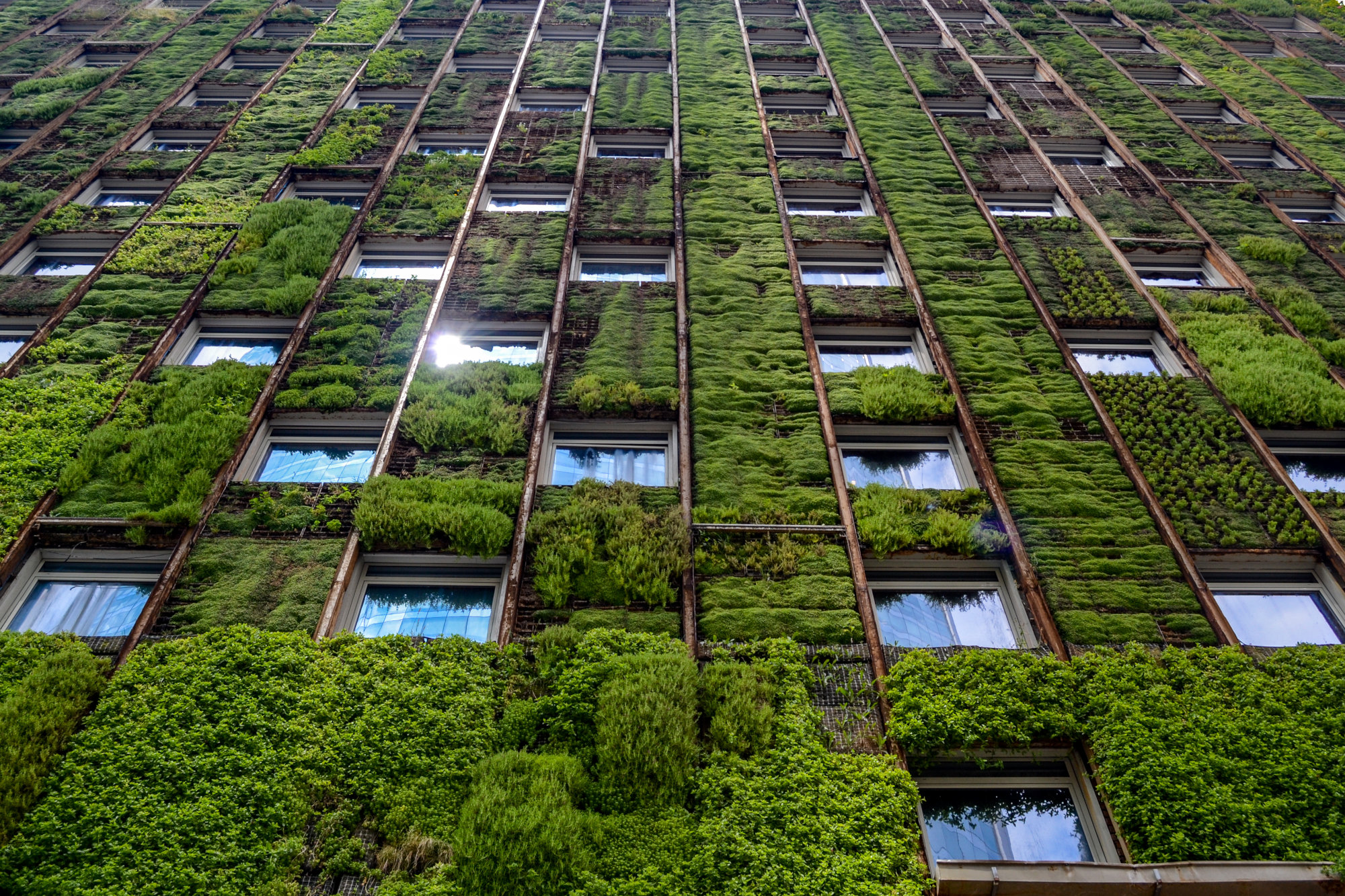
Modern cities are complex, three-dimensional structures, raising questions about how to count non-standard greenery like living roofs and vertical gardens. In classic statistics, green roofs are only counted if they are publicly accessible—essentially functioning as elevated parks. Technical green roofs, while ecologically beneficial to the building itself, are excluded from recreational area calculations.
Vertical greening is even trickier. In standard land-use statistics, a green wall usually contributes 0 m² because calculations are based on ground projection. However, advanced environmental indices, such as the Green Factor, account for green walls using a reduction factor (typically 0.5–0.7 of their vertical surface area). This means that while a green wall won't help the city officially meet WHO surface area targets, it makes a tangible contribution to reducing street temperatures—a benefit clearly visible on thermal maps and satellite imagery.
How to Assess Effectiveness Without Complex Instruments
Since official data can be skewed by bare slopes or non-functional saplings, residents can use the 3-30-300 rule to judge their environment. This modern urban planning standard offers three clear criteria for a healthy neighborhood:
- 3 Trees: Every resident should be able to see at least three trees from their window.
- 30% Canopy: The projected canopy cover of mature trees in every neighborhood should cover at least 30% of the area. This is easy to spot on a satellite map: if you see significantly more gray roofs and asphalt than green mass, the district fails the sustainability test.
- 300 Meters: A quality public green space should be within 300 meters of every home.
These criteria allow us to assess real comfort "here and now," regardless of how the land is classified in cadastral documents.
Official Sources
For a deeper dive into the methodology, refer to the official WHO brief: “Urban green spaces: a brief for action”, available via the WHO Regional Office for Europe. This document confirms that access to green space is not a matter of aesthetics, but a critical factor for public health and strategic urban planning.